
Facebook is still one of the most influential platforms for business entities of any scale because it hosts more than 3 billion active users per month. But even with all these possibilities, too many marketers still manage to waste their advertising budgets due to either poor planning or unclear targeting, not to mention the technical errors that could have been avoided. With proper accuracy in planning and execution, Facebook Ads can deliver exceptional ROI.
In this blog, we’ll investigate five of the most common Facebook ad mistakes that drain your budget and show how to fix them to make every dollar you spend count toward your marketing goals.
1. Poor Audience Targeting
One of the biggest mistakes advertisers make is targeting the wrong audience. Facebook’s advertising platform is so rich in targeting options-from demographics and interests to behaviors and lookalike audiences-but this also means it’s easy to get it wrong. Many businesses either target too broadly, trying to reach everyone, or too narrowly, excluding potential buyers without realizing it.
If the audience is too broad, your ad will show up for people who are unlikely to be interested in your product or service. This automatically increases CPC and cost per conversion, while keeping engagement and conversions low. Conversely, if an audience is too narrow, you may not receive enough impressions to gather useful data or effectively scale your campaign.
To fix this, first define your ideal customer profile, including age, location, interests and behavior. Use Facebook Audience Insights to understand what your current customers have in common. With Custom Audiences you can retarget people who have already engaged with your brand, and with Lookalike Audiences you can find new people who are similar to your best customers. The goal is to reach the right people, not just more people.
2. Weak or Irrelevant Ad Creative
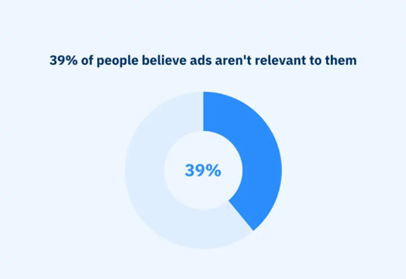
Even the most precise targeting will not save your campaign if the ad creative can’t catch their attention. It is easy to overlook an ad with a dull image, confusing copy, or irrelevant message-and that is a waste of your impressions and clicks. Every time users log in to Facebook, they are bombarded with ads, so your creative needs to be compelling immediately.
A common mistake involves using generic visuals or stock images that fail to create that emotional connection with the audience. Remember, people on Facebook are not actively shopping; they’re browsing. Your ad needs to interrupt their scrolling with something visually appealing and emotionally relevant.
The solution lies in high-quality visuals and concise, compelling copy that speaks directly to your audience’s needs. Use lifestyle imagery or video that showcases your product in action and anchors your text on a transformation or value it will bring. A/B testing helps one gauge what version of an ad will work best, whether it is changing the visuals, headline, or CTA. Little changes in creative often drive major increases in performance and budget efficiency.
3. Ignoring the Facebook Pixel and Conversion Tracking
A very expensive mistake is running ads without proper tracking and measurement. Too many advertisers fail to install the Facebook Pixel: a tiny piece of code that lets you track user actions on your website, such as purchases, form submissions, or viewed pages. Without it, you’re essentially flying blind: you can see clicks, but you have no idea what happens after someone lands on your site.
The Facebook Pixel is needed to accurately measure ROI; in addition to that, it optimizes your campaigns. You can track conversions, build up retargeting audiences, and train Facebook’s algorithm to show your ads to people who are most likely to convert. Without this information, the algorithm of Facebook cannot learn precisely who your ideal customers are, which may result in wasted ad spend on unqualified clicks.
To do so, set up the Pixel on all web pages and configure Standard Events-such as “Add to Cart” or “Lead”-or Custom Conversions, depending on your business objectives. With active Pixels, you’ll be able to gauge which ads drive real results and which ones need further adjustment.
4. Failing to Optimize Landing Pages
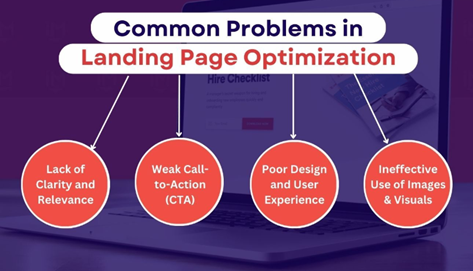
Even the best Facebook ad can’t drive any results if it leads users through to a poorly designed or irrelevant landing page. So many advertisers make the common mistake of sending traffic to their homepage, rather than a specific page which is relevant to the message of their ad. When your users land on a page that does not fulfill the promise of an ad, they will lose interest quickly, thus increasing bounce rates and lowering conversion rates.
For example, if your ad advertises a 20% discount on a specific product the landing page should highlight that product and discount not just the brand’s general catalog. The user experience should be seamless from the moment they click on the ad to the moment they take action.
A good landing page is fast, mobile-friendly, has visual consistency, and an offer of some kind (like “Buy Now,” “Sign Up,” or “Get Started”). It should load quickly-ideally within three seconds-and eliminate distractions such as unnecessary links or pop-ups.
Use social proof, such as customer testimonials or trust badges, to help establish credibility. Make sure messaging, tone, and visuals all match the ad creative. This consistency boosts conversion rates, but also enhances your Quality Score so you can pay less per click over time.
5. Neglecting to Test, Analyze, and Adjust
Perhaps the biggest — and most expensive — mistake is neglecting to analyze ad performance and continuously improve. Facebook Ads are not a “set it and forget it” channel. The platform’s algorithm and audience behavior are always in flux, and what worked last month may not work today.
Otherwise, you might not realize you are continuing to spend money on poor-performing ads when that’s even unnecessary. By regularly studying performance metrics, one knows what drives results and what wastes a budget.
To avoid this, apply A/B testing to each significant ad component: images, headlines, CTAs, audiences, and even placements. Then, analyze your data in Facebook’s Ads Manager for metrics such as CTR, conversion rate, and ROAS. Once you have enough data, pause those low-performing ads and scale the high performers.
Remember that optimization is an ongoing process. The more you test and refine your campaigns, the better your budget will be used.

Conclusion:
Facebook ads are one of the most cost-effective means for growing your business-but only if you avoid the common pitfalls that waste budgets.
And the best news of all is that each and every one of these mistakes can be overcome by implementing the right approach and attention to detail. By knowing your audience, producing captivating creatives, accurately tracking performance, optimizing the user journey, and constantly testing and adjusting your approach, you can transform your Facebook Ads from budget-draining expenses into profitable and powerful assets.
What’s most important in digital marketing is precision and adaptability. The brands that succeed on Facebook aren’t necessarily the ones that spend the most money; they’re the ones who make every dollar count.